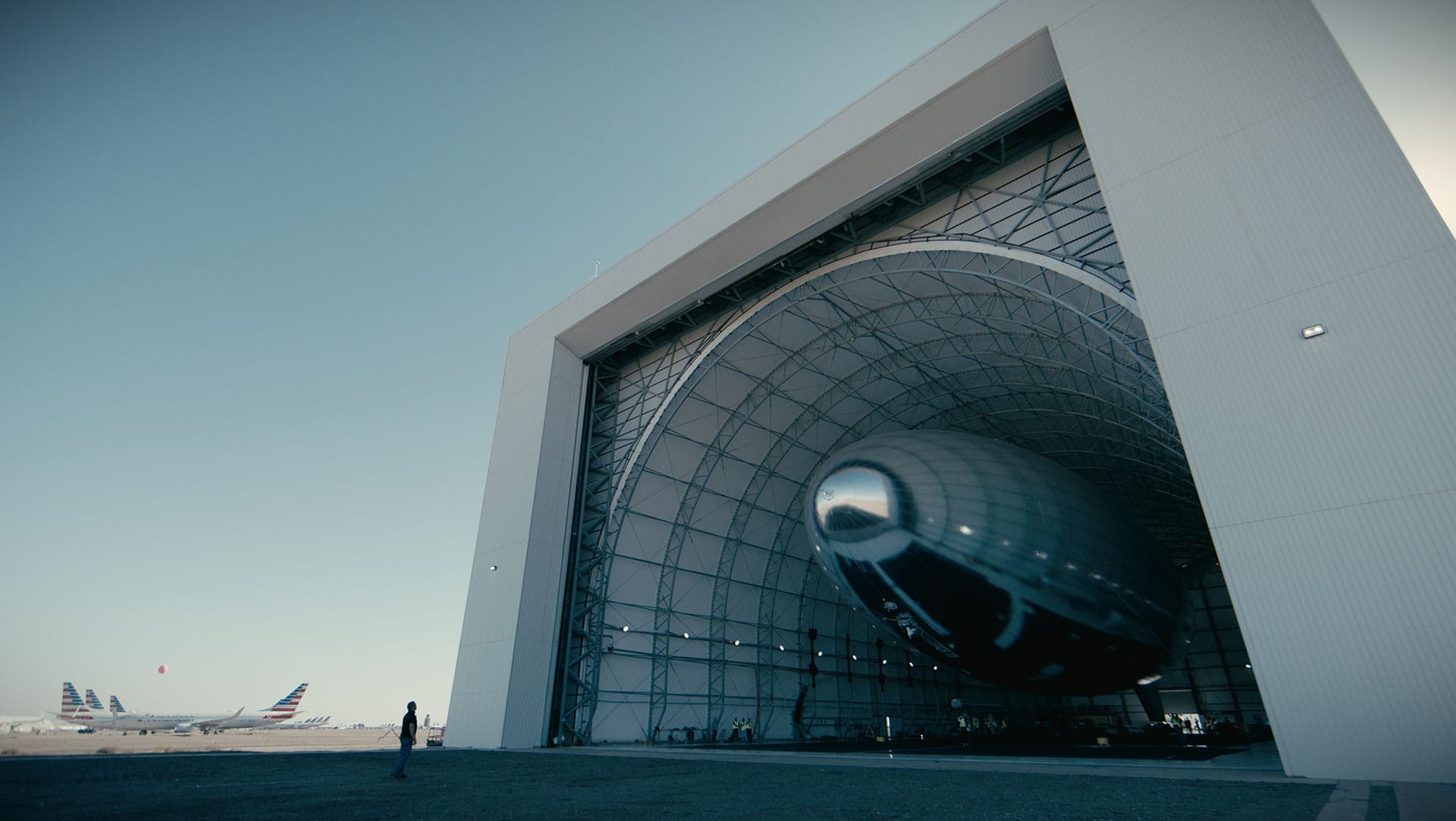
Sceye and Softbank: Inside The Haps Partnership For Japan
1. This Partnership Is More than just Connectivity
Two businesses with different backgrounds including a New Mexico-based stratospheric aerospace firm and one of Japan’s most prestigious telecom conglomerates to develop a nation-wide network of high-altitude platform stations the scope of the project is much bigger than broadband. What’s happening with the Sceye SoftBank partnership represents a genuine investment in the stratospheric network growing into a permanent and profitable network of national telecomsnot a pilot program or a proof of principle, rather rather the beginning of a full-scale commercial rollout that has a specific timeline as well as a large-scale plan for the country.
2. SoftBank has a Strategic Motive to Support Non-Terrestrial Networks
Interest by SoftBank in HAPS was not a sudden occurrence. Japan’s geography — thousands of islands, mountains and coastal zones frequently attacked by earthquakes and storms which creates permanent access gaps that ground infrastructure can’t by itself close. Satellite connectivity is a benefit, but costs and latency are still limiting components for mass-market application. A stratospheric layer sitting at 20 kilometers, keeping its position over certain regions and offering bandwidth with low latency for standard devices, will solve many of these issues at once. For SoftBank investing into stratospheric systems is a natural extension of a strategy already in place to diversify away from terrestrial network dependence.
3. Pre-Commercial Services to be Planned for Japan in 2026 Signify Real Momentum
The key element that distinguishes this announcement from previous HAPS announcements is the aim of pre-commercial services being offered in Japan by 2026. It’s not a vague and uncertain commitment, but a particular operational milestone, with infrastructure, regulatory, and commercial implications attached to it. The pre-commercialization process means the platforms must be able to perform station keeping effectively, delivering good quality signals and connecting to SoftBank’s current network architecture. The way this date has been publicly announced indicates that both parties have met the technical and regulatory groundwork to treat it as a credible target rather than aspirational marketing.
4. Sceye provides endurance and payload Capacity That Other Platforms Struggle to match
Not all HAPS vehicle is designed to be part of being part of a large-scale commercial network. Fixed-wing solar aircraft typically sacrifice payload capacity for efficiency at altitude, which limits how much observation or telecommunications equipment they can carry. Sceye’s airship design, which is lighter than air, follows a different approach — buoyancy is the primary way to carry the weight of the vehicle, which means available sunlight is used for propulsion along with stationkeeping, and providing power to onboard systems, rather than simply maintaining altitude. This design choice can result in significant benefits in payload capacity and mission endurance both of which are vital tremendously when you’re trying maintain continuous coverage over populated regions.
5. The Platform’s Multi-Mission Capability helps make the Economic Work
One of many untapped aspects of the Sceye approach is the fact that one platform does not need to justify its operation cost solely on the basis of telecoms revenue. The same vehicle that offers an ultra-high speed broadband network can also host sensors for monitoring greenhouse gases as well as disaster detection as well as earth observations. In a country such as Japan, which faces significant natural disaster risk and has a national policy of emissions monitoring This multi-payload structure will make the infrastructure much easier to justify on a and commercial level. Telecoms antennas and temperature sensor don’t compete — they’re sharing a platform which is already there.
6. Beamforming along with HIBS Technology Help to make the Signal Commercially Usable
In order to offer broadband service from 20 miles away, it can’t be as simple as the antenna down. The signal has to be designed, shaped, and managed dynamically so that it can serve users efficiently across a larger surface. Beamforming technology lets the stratospheric antenna to focus the energy of signals the most needed areas, instead of broadcasting the same way and losing capacity on empty seas or areas that are uninhabited. Combined with the HIBS (High-Altitude IMT Base Station) standards that make the platform compatible with existing 4G and 5G device ecosystems, which means that regular smartphones are able to connect without special equipment — an essential need for any mass-market installation.
7. The Japan’s Island Geography Is an Ideal Test Case for the entire world.
If stratospheric connectivity works to a greater extent in Japan the design becomes accessible to all other countries with similar coverage issues, which is most countries around the globe. Indonesia, the Philippines, Canada, Brazil and many Pacific islands have different versions of the same issue that is a result of populations scattered across terrain that defeats conventional infrastructure economics. Japan’s combination and the capacity to regulate real geographic necessity makes it an ideal possible proving ground for country-wide networks based upon stratospheric platforms. Everything that SoftBank and Sceye can demonstrate will help deployments in other places for years.
8. There is a reason why the New Mexico Connection Matters More Than It Appear
Sceye operating from New Mexico isn’t incidental. The state has high altitude testing conditions, a well-established structures for aviation, along with an airspace designed to accommodate the kind of extended flight tests that stratospheric vehicle development requires. Sceye is among the more serious aerospace firms of New Mexico, Sceye has created its development program in an environment that encourages genuine engineering iteration and not just press release cycles. The difference between announcing a HAPS platform and actually station-keeping one for weeks at a time is enormous, also the New Mexico base reflects a company who has been doing the mundane work to fill the gap.
9. The Founder’s Vision Influenced the Partnership’s future plans
Mikkel Vestergaard’s career path with a focus on applying technology to solve environmental and humanitarian challenges — has visibly informing what Sceye strives to create and why. The alliance with SoftBank doesn’t exclusively represent a telecoms-related play. The platform’s emphasis in disaster prevention, real-time monitoring and connectivity to regions with limited access is an underlying belief that the stratospheric internet should serve broadly-based social objectives alongside commercial ones. This stance has probably contributed to making Sceye an even more appealing partner for a company, such as SoftBank that operates in a regulatory and public environment where its corporate objectives are of a high importance.
10. 2026 Will be the Year in which where the Stratospheric Tier either proves itself or Resets Expectations
The HAPS sector has been promoting commercialization for much longer than observers care to remember. What makes the Sceye and SoftBank timeline genuinely significant is that it has one specific country, specific operator, and a service milestone to a certain year. If commercial pre-commercial services in Japan launch on schedule with the required performance 2026 is as the time when connectivity across the stratosphere shifted from promising technology to functioning infrastructure. If it fails, the sector will have to answer more questions over whether the engineering difficulties are as solved like recent reports indicate. Or not, the consortium has made a mark in the sky worth watching. Take a look at the recommended marawid for blog recommendations including softbank satellite communication investment, what are haps, Sustainable aerospace innovation, detecting climate disasters in real time, sceye haps project status, what does haps, softbank haps pre-commercial services 2026 japan, Sceye HAPS, Sceye HAPS, softbank sceye haps japan 2026 and more.

How Stratospheric Platforms Shape Earth Observation
1. Earth Observation is always constrained by the position of the observer
Every step in the human race’s ability in observing the planet’s surface has come from the search for an elevated vantage point. Ground stations allowed for local precision but they were not able to reach. Aircraft increased range, but also consumed fuel and required crews. Satellites provided coverage across the globe but brought distance, and this traded resolution and revisit frequency against scale. Every step up in altitude resulted in solving some issues and introducing some others. The trade-offs made by each approach have changed our understanding about our planet and more importantly, what we not able to discern enough to respond to. Stratospheric platforms provide a vantage area that connects aircraft and satellites to solve many of the most persistent trading offs, not just shifting the two.
2. Persistence Is the Observation Capability Which Changes Everything
The most revolutionary thing the stratospheric platform provides for earth observation, is not the resolution of it; not covering area, nor sensor sophistication — it is persistence. The capability to view the same place over a long period of time, for days or weeks at a go, without gaps in the record of data, will alter the types of queries that earth observations can answer. Satellites help answer questions on state — what does the location look like at this point? Continuous stratospheric platforms provide answers to questions regarding process: how is this scenario developing in the right direction, what is the rate, and influenced by which factors, and at what point does intervention become required? In the context of monitoring greenhouse gas emissions, flood progression, wildfire growth and the spread of coastal pollution processing questions are the ones to consider when making a decision and require the continuity that only persistent observation can provide.
3. The Altitude Sweet Spot Produces Resolution That Satellites Do Not Match at Scale
Physics determines how to relate depth, altitude and aperture and resolution of the ground. A sensor operating at 20 km is able to attain ground resolution levels which require a large aperture to replicate from low-Earth orbit. It is the reason a stratospheric Earth observation platform is able to distinguish distinct infrastructure elements such as pipes, tanks for storage, commercial plots of land, coastal vesselsthey appear as sub-pixel blur in satellite imagery at similar costs to sensors. If you are looking to monitor oil pollution originating from the offshore facilities as well as determining the precise location of methane leaks in the pipeline’s path or tracing the leading edge of a wildfire through vast terrains, this resolution advantage directly impacts the details available to those who operate and make decisions.
4. Real-Time Monitoring of Methane Becomes Operationally Effective from the Stratosphere
Methane monitoring via satellites has significantly improved in recent years But the combination the frequency of revisit and the resolution limitations implies that satellite-based detection of methane tends in identifying large, constant emission sources rather that episodic releases from isolated point sources. A stratospheric system that provides real-time methane monitoring for an oil and gas-producing region, a large agricultural zone, or a waste management corridor will alter the dynamic. Continuous observation at the level of stratospheric resolution is able to detect emission events when they occur, and attribute them to specific sources with precision that satellite information cannot offer, and provide the kind of time-stamped, specific evidence of the source that regulatory enforcement and voluntary emissions reduction programmes need to work efficiently.
5. Sceye’s Approach Integrates Observation With the Broader Mission Architecture
What sets Sceye’s method of stratospheric observations of earth from treating it as a standalone monitoring station is incorporation of observation capabilities into the larger multi-mission platform. The same vehicle with greenhouse gas sensors also comes with connectivity hardware such as disaster detection systems as well as other environmental monitoring payloads. This isn’t just a cost-sharing process, but has a solid understanding that the data streams coming from different sensors can be more valuable by combining them than if used alone. Connectivity platforms that observes is more valuable for operators. An observation platform that also can provide emergency communications is more beneficial to governments. The multi-mission structure increases the use of one stratospheric platform in ways the single-purpose, separate vehicles cannot replicate.
6. Monitoring Oil Pollution shows the Operational Benefits of Close Proximity
Monitoring oil spills in offshore and coastal environments is an area in which stratospheric observation offers concrete advantages over both satellite and airborne approaches. Satellites can identify massive slicks but struggle with the necessary resolution required to discern expanding patterns, shoreline contact as well as the nature of smaller releases that precede larger ones. Aircrafts can reach the required resolution but cannot maintain continuous coverage over large areas without incurring a prohibitive cost for operation. An stratospheric holding platform over a coastal area could detect pollution-related events right from the point of recognition through spreading as well as shoreline impacts and eventual dispersal. the continuous spatial and temporal data that both emergency intervention and legal accountability require. The ability to track pollution from oil across a wide observation time frame without gaps is simply not achievable from any other type of platform with comparable costs.
7. Wildfire Observation from the Stratosphere Captures What Ground Teams can’t See
The view that stratospheric altitude can provide over an active wildfire is different from that offered at ground level or from low-flying aircraft. Fire behaviour across complicated terrain — spotting ahead of the front of fire, the crown fire development, interaction of the fire with variations in wind patterns and the formation of fuel moisture gradients are visible in its full dimension only at sufficient altitude. An observation from a stratospheric platform of an active fire provides incident commanders with a continuous, broad-range view of fire activity which enables the decision-making process of resource deployment in accordance with what the fire is actually doing rather than the specific issues that ground crews in particular places are experiencing. Being able to detect climate-related disasters in real time from this position does more than improve responsein fact, it enhances the accuracy of decisions taken by the command team throughout the duration of an event.
8. The Data Continuity Advantage Compounds Over the course of time
The individual events of observation are worth recording. Continuous observations record a compounding worth that grows exponentially with duration. A week of stratospheric earth observation over an agricultural region is used to establish a baseline. A month’s data reveal seasonal patterns. A year is the total annual cycle of crop development the use of water soil conditions, and yield variations. Multi-year data sets are essential for understanding how the area is changing in response to changes in climate and land management techniques, and the trends in water availability. For natural resource management applications which include agriculture, forestry and water catchment zone management — this accumulated observation record is more valuable than any one individual observation, regardless of how high resolution it is or when it’s made available.
9. The technology that allows long Observation Missions is developing rapidly.
Stratospheric Earth observation as good as the platform’s ability to remain in the station long enough to yield valuable data records. The energy systems that determine endurance – solar cell efficiency on aircrafts in the stratospheric region, lithium-sulfur batteries with energy density of 425 Wh/kg. The closed power loop that carries all systems throughout the diurnal cycle — are improving at a pace that is starting to make multi-week and long-term stratospheric missions feasible rather than aspirationally scheduled. Sceye’s work on development with New Mexico, focused on making sure that these energy systems are tested under real operational conditions and not predictions from laboratories, is the kindof engineering progress that can be translated into longer observation missions and efficient data records for applications that rely on them.
10. Stratospheric Platforms Create an Environmental Layer that is New Responsibility
Perhaps the most consequential long-term consequence of the aging stratospheric observation capabilities is what it does to the data surroundings around environmental compliance as well as sustainability of natural resources. If continuous, high-resolution surveillance and analysis of emissions sources, land use change water extraction, as well as pollutant events is available constantly rather than periodically, the responsibility landscape shifts. Industrial operators, agricultural firms, governments, and companies engaged in extraction of natural resources all behave differently when they recognize that what they’re doing is being observed continuously from above with data that is specific enough that it is legally significant and in time enough for regulators to take action before the damage becomes irreparable. Sceye’s platform for stratospheric observations, as well as the general category of high altitude platform stations that have similar observation objectives, are constructing an infrastructure where environmental accountability is rooted in continuous observation, not regularly self-reporting. It’s a change that’s impact extends far beyond the aerospace sector that is making it possible. Follow the top Stratosphere vs Satellite for blog tips including softbank haps pre-commercial services 2026 japan, Stratospheric platforms, sceye haps softbank partnership, sceye haps airship specifications payload endurance, what are high-altitude platform stations haps definition, softbank pre-commercial haps services japan 2026, telecom antena, Real-time methane monitoring, sceye disaster detection, Lighter-than-air systems and more.